
A RFID visitor management system utilizes RFID technology to streamline the check-in and check-out processes, enhance security, and improve overall visitor management within an organization. Here's a step-by-step overview of how RFID visitor management systems typically work:
- Issuing RFID-enabled Visitor Badges: Upon arrival, visitors are provided with RFID-enabled badges. These badges contain a small RFID tag or chip that stores unique identification information related to the visitor, such as their name, affiliation, access permissions, and duration of the visit. These badges can be in the form of cards, wristbands, or even stickers.
- RFID Reader Placement: RFID readers are strategically placed at various access points throughout the organization's premises, such as entry gates, doors, or reception desks. These readers consist of an antenna and a transceiver that emit radio waves and capture the responses from nearby RFID tags.
- Tap or Wave for Identification: When a visitor approaches an access point, they are required to tap or wave their RFID badge within close proximity to the RFID reader. The reader emits radio waves, which energize the RFID tag on the badge.
- Tag and Reader Communication: Once energized, the RFID tag on the badge sends a unique identifier back to the RFID reader. This identifier contains the visitor's information stored in the tag's memory. The reader captures the identifier and transfers it to the visitor management system's software for processing.
- Authentication and Verification: The visitor management system's software receives the identifier from the RFID reader and matches it against the database of authorized visitors. It verifies the visitor's identity, access permissions, and any other relevant information. If the visitor is authorized, the system grants access to the requested area.
- Logging Entry and Exit: As the visitor proceeds through different access points within the organization, the RFID system continues to log their movement and activities in real-time. This allows for comprehensive monitoring and tracking of visitors throughout their stay.
- Check-out Process: When the visitor is ready to leave, they can once again tap or wave their RFID badge at designated reader points to check out. The system records the departure time, ensuring accurate tracking and maintaining an up-to-date record of visitor movements.
- Reporting and Analytics: The visitor management system's software collects and stores the data generated by the RFID system. This data can be analyzed and used to generate reports, identify visitor patterns, assess peak visitation hours, and gain insights for operational improvements and security measures.
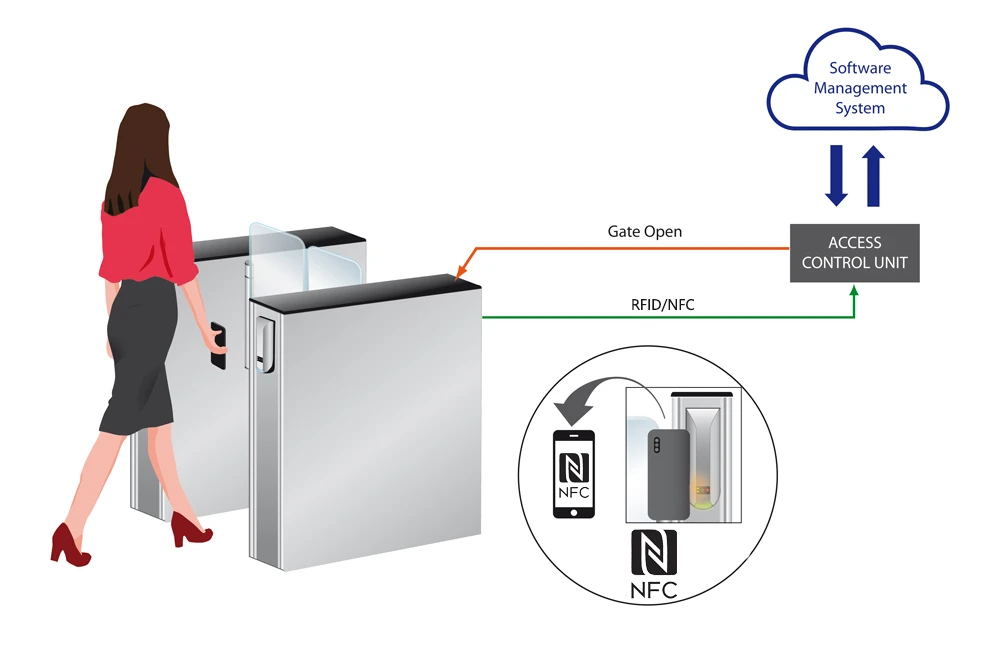
By leveraging RFID technology, visitor management systems can streamline processes, enhance security, automate data collection, and improve the overall visitor experience. The contactless nature of RFID identification allows for quick and efficient check-ins and check-outs, reducing waiting times and eliminating manual paperwork.